

Clinical Services
Aesthetic Services
Make An Appointment
Mon - Sat: 11:00 AM - 7:00 PM
Sunday: Closed
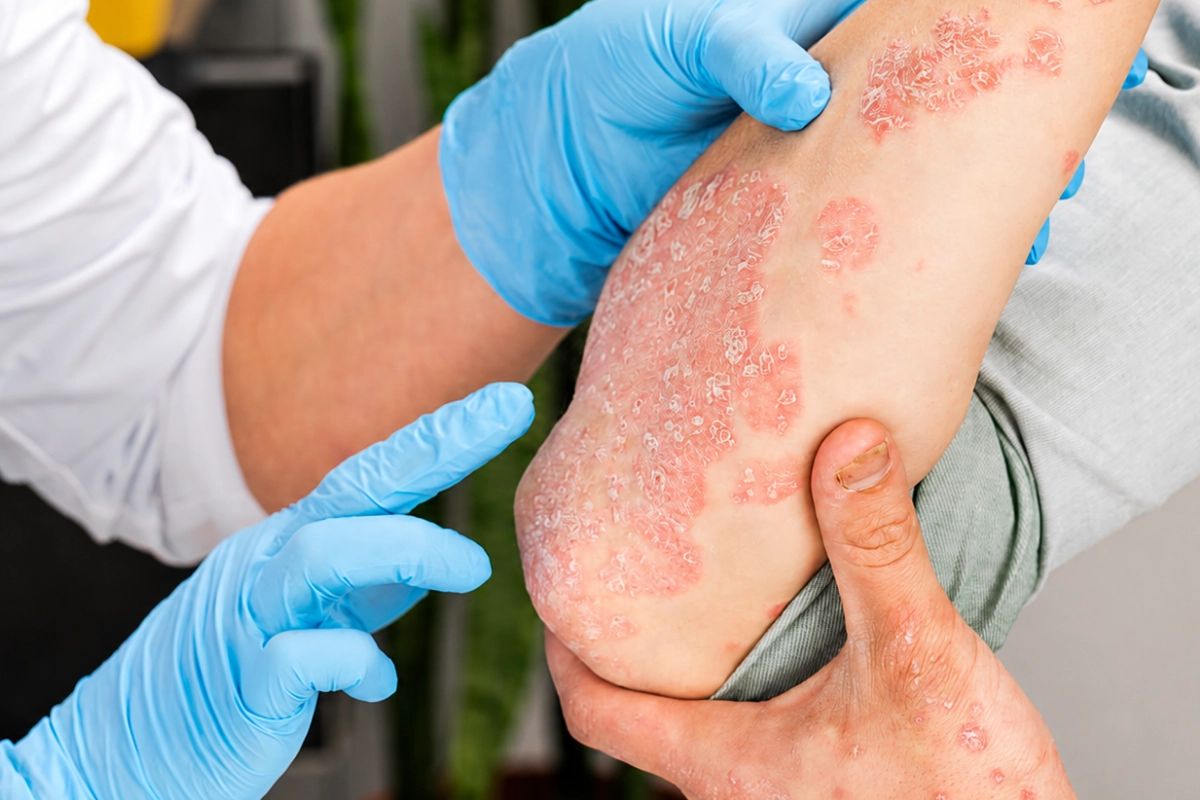
Dermatologist-Led Care for Psoriasis, Flaky Skin, Scaling, and Recurring Flare-Ups
Psoriasis is a long-term skin condition that can cause red patches, thick scaling, itching, flaking, discomfort, and repeated flare-ups. It is often mistaken for dry skin, dandruff, allergy, or fungal infection, but psoriasis treatment in Dubai needs proper medical diagnosis and long-term management.
Psoriasis treatment is planned by experienced dermatology specialists who focus on understanding the type, severity, triggers, and impact of the condition before recommending treatment. The clinic provides expert care for medical dermatology concerns, including eczema, psoriasis, rosacea, melanoma, vitiligo, dermatitis, ringworm, and more.
What is Psoriasis?
Psoriasis is a chronic inflammatory skin condition where the skin cells multiply faster than normal. Because of this, cells build up on the surface of the skin and form thick, scaly, flaky, or inflamed patches.
It commonly affects the elbows, knees, scalp, back, hands, feet, nails, and skin folds. In some patients, psoriasis may be mild and limited to a few areas. In others, it may be more widespread, painful, itchy, or emotionally distressing.
Psoriasis is not contagious. It does not spread from one person to another through touch. However, it can keep coming back if triggers are not identified and the condition is not managed correctly.
At Minal Medical Centre, psoriasis care is not only focused on temporary relief. The aim is to reduce inflammation, manage flare-ups, improve skin comfort, and support long-term skin health.
Who Needs Psoriasis Treatment?
Signs You May Need Professional Pigmentation Treatment
You may need dermatologist-led psoriasis treatment if you notice:
- Red, raised, or inflamed skin patches
- Thick white or silvery scaling
- Flaky skin that keeps returning
- Itching, burning, or soreness
- Scalp flaking that does not improve with regular dandruff shampoos
- Cracked or painful skin
- Dry patches on elbows, knees, hands, feet, or back
- Nail changes such as pitting, thickening, lifting, or discoloration
- Skin flare-ups during stress, illness, weather change, or after certain medications
- Rashes that are recurring or not responding to basic creams
- Skin patches that are spreading or becoming uncomfortable
A consultation is especially important if psoriasis is affecting your daily comfort, sleep, confidence, movement, or if you are also experiencing joint pain, stiffness, or swelling.
Common Types of Psoriasis We Treat
Psoriasis can appear in different forms. Identifying the type helps the dermatologist plan the right treatment.
Plaque Psoriasis
This is the most common type. It appears as raised, red patches with white or silvery scales, often on the elbows, knees, scalp, or back.
Scalp Psoriasis
Scalp psoriasis can look like severe dandruff, but it may cause thicker scaling, itching, redness, and flaking that keeps coming back.
Nail Psoriasis
Psoriasis can affect the nails and cause pitting, thickening, lifting, discoloration, or crumbling. It may sometimes be confused with fungal nail infection.
Inverse Psoriasis
This appears in skin folds such as underarms, groin, under the breasts, or between the buttocks. It may look red, smooth, irritated, and painful.
Guttate Psoriasis
This type may appear as small drop-like spots, often after a throat infection or illness.
Palm and Sole Psoriasis
Psoriasis on the palms and soles can cause thick scaling, cracking, pain, and difficulty with walking or using the hands.
How Psoriasis Treatment Works
Psoriasis treatment at Minal Medical Centre begins with a detailed dermatology consultation. The doctor examines the skin, understands the patient’s symptoms, reviews previous treatments, and checks for possible triggers.
The treatment plan depends on the type of psoriasis, severity, affected areas, patient age, lifestyle, associated symptoms, and response to previous treatments.Professional scalp psoriasis treatment in Dubai helps reduce flaking, itching, and irritation with advanced dermatology care tailored to your scalp condition.
1. Detailed Skin Assessment
The dermatologist examines the affected areas and checks the pattern, thickness, scaling, inflammation, and severity of psoriasis.
This helps confirm whether the condition is psoriasis or another skin concern that may look similar, such as eczema, fungal infection, seborrheic dermatitis, or allergic rash.
2. Trigger and History Evaluation
Psoriasis can worsen due to certain triggers. During consultation, the doctor may review:
- Stress levels
- Recent infections
- Weather changes
- Skin injury or friction
- Certain medications
- Smoking or alcohol use
- Family history
- Previous treatments
- Joint pain or stiffness
- Scalp and nail involvement
Understanding triggers helps reduce repeated flare-ups and supports better long-term control.
3. Medical Treatment Planning
Treatment may include prescription creams, medicated shampoos, scalp applications, anti-inflammatory treatment, moisturising support, keratolytic agents to reduce scaling, and other medical therapies depending on the case.
For mild psoriasis, topical treatment may be enough. For moderate or severe psoriasis, the dermatologist may discuss more advanced treatment options or referral-based care where required.
4. Light-Based Treatment Support
In selected cases, light-based therapies may be considered depending on the patient’s condition, skin type, and medical suitability. Minal Medical Centre is known for its dermatology and laser expertise, and the clinic has a long-standing history in introducing dermatological laser technology in the Middle East.
Any light-based treatment should only be recommended after proper dermatology assessment, because psoriasis treatment must be personalised and medically appropriate.
5. Scalp and Nail Care Guidance
If psoriasis affects the scalp or nails, the dermatologist may recommend targeted treatment because these areas often need a different approach.
Scalp psoriasis may require medicated shampoos, leave-on applications, scale-softening treatments, and maintenance care. Nail psoriasis may need proper assessment to rule out fungal infection or other nail disorders.
6. Long-Term Flare-Up Management
Psoriasis often needs long-term control rather than one-time treatment. The doctor may guide the patient on maintenance care, skincare habits, flare-up warning signs, and follow-up plans.
The goal is to reduce flare-ups, improve comfort, and help patients manage the condition with more confidence.
Benefits of Psoriasis Treatment at Minal Medical Centre
Proper Diagnosis
Psoriasis can look like eczema, dandruff, fungal infection, allergy, or dry skin. A dermatologist-led diagnosis helps avoid wrong treatment and delayed care.
Relief From Itching, Scaling, and Discomfort
The right treatment can help reduce redness, scaling, flaking, itching, soreness, and skin irritation.
Personalised Treatment Plan
Every psoriasis case is different. Treatment is planned based on the type of psoriasis, severity, location, triggers, and patient history.
Better Long-Term Control
Psoriasis may not always disappear permanently, but it can often be managed well with consistent medical care, trigger control, and follow-up.
Support for Scalp and Nail Psoriasis
Scalp and nail psoriasis are commonly missed or wrongly treated. Specialist assessment helps manage these areas more effectively.
Experienced Dermatology Care
Minal Medical Centre is a trusted dermatology clinic in Dubai with two clinics and specialist knowledge across medical dermatology, venereology, rheumatology, hair and nail disorders, and non-surgical aesthetic treatments.
Care Across All Age Groups
The clinic provides dermatology care from pediatric to geriatric patients and treats skin, hair, and nail concerns with medical and aesthetic expertise.
Why Psoriasis Should Not Be Ignored
Many patients delay treatment because they think psoriasis is only dryness or dandruff. But when psoriasis is not managed correctly, it can become more uncomfortable and harder to control.
Untreated or poorly managed psoriasis may lead to:
- Repeated flare-ups
- Thickened skin patches
- Cracking and bleeding
- Scalp discomfort and heavy flaking
- Nail changes
- Sleep disturbance due to itching
- Emotional stress or self-consciousness
- Risk of secondary infection from scratching
- Possible joint-related symptoms in some patients
If you have recurring flaky patches, scalp scaling, nail changes, or skin redness that keeps coming back, it is better to get a dermatologist’s opinion early.